
June Retail
Insights
How Digital Product Passports, transparency requirements and evolving regulations could influence physical retail, displays and in-store communication.
Retail displays have traditionally been designed to attract attention, communicate key messages and support product sales. Today, they are being asked to do much more.
As sustainability claims require greater evidence, QR-enabled experiences become more common and Digital Product Passports move closer to reality, retail environments are increasingly becoming information touchpoints as well as marketing assets.
The challenge for brands is no longer simply creating engaging displays. It is ensuring information remains accurate, relevant and consistent across every store location.
Why Retail Communication Is Changing
Beyond legislation and compliance, consumer expectations are also evolving. Shoppers have greater access to information than ever before and are becoming more conscious of where products come from, how they are made and whether brand claims can be substantiated.
Increasingly, consumers expect transparency and authenticity from the brands they buy from. When information is difficult to access, unclear or appears inconsistent, trust can quickly erode.
For brands transparency is becoming more than a sustainability consideration. It is increasingly a customer experience and brand credibility issue.
Transparency Is Becoming a Competitive Advantage
Consumers have more access to information than ever before. From sustainability ratings and product review platforms to QR-enabled experiences and emerging Digital Product Passports, shoppers are increasingly able to verify the claims brands make.
As expectations around transparency grow, brands are being asked to provide clearer, more accessible and more trustworthy information. Increasingly, consumers want evidence rather than promises.
For brands, transparency is becoming more than a compliance or sustainability consideration. It is increasingly linked to trust, credibility and purchasing decisions.
Many of the organisations already exploring Digital Product Passports and enhanced product information are not simply preparing for future legislation. They are responding to changing customer expectations today.
As access to information becomes easier, the ability to communicate accurate and consistent information across both digital and physical retail environments will become increasingly important.
How Leading Brands Are Already Preparing
While Digital Product Passports may still sound like a future requirement, a growing number of brands are already testing ways to provide customers with greater access to product information.
Several organisations have launched pilot programmes that allow shoppers to access details such as material composition, sourcing information, care instructions, repair guidance and sustainability credentials through QR codes, digital IDs and connected product experiences.
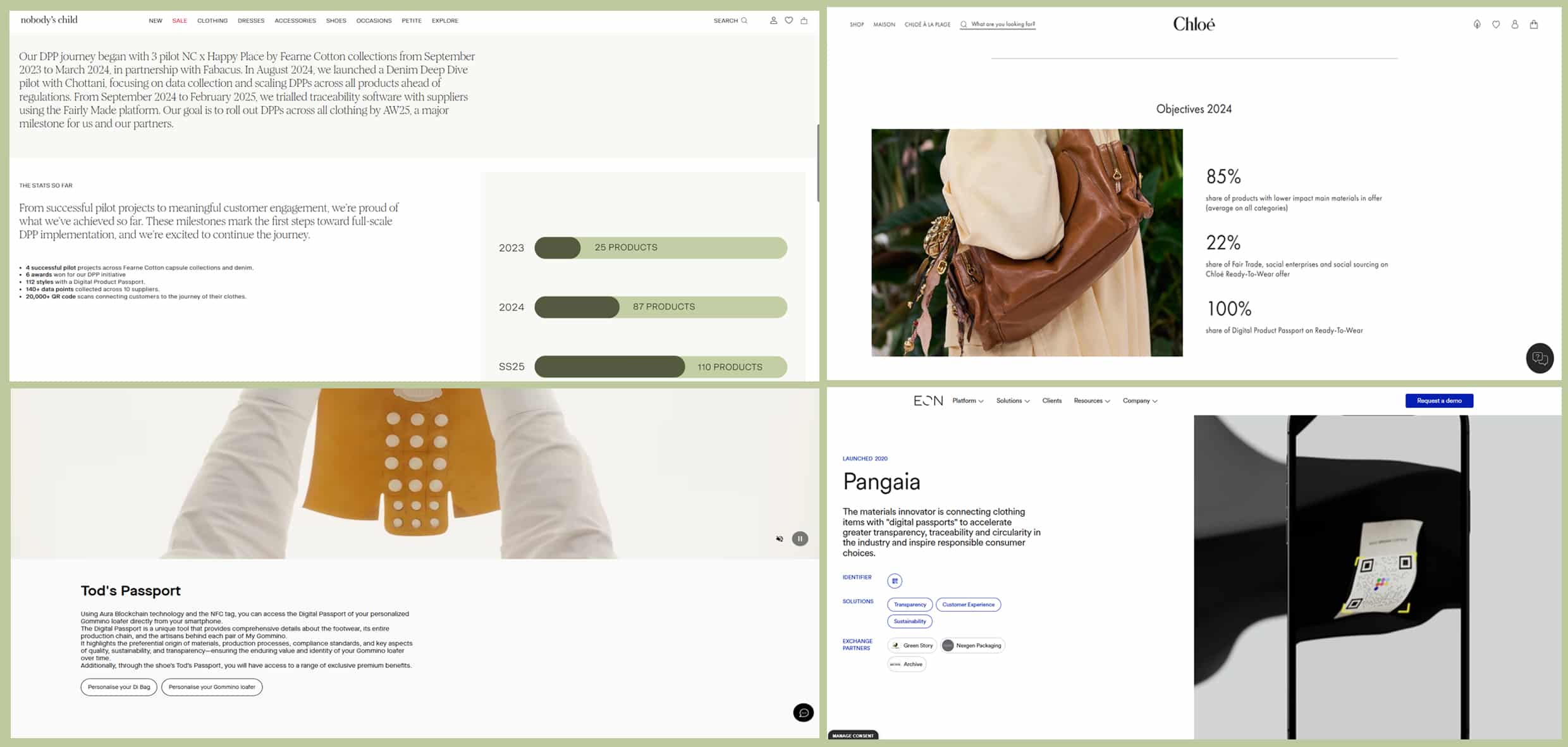
Nobody’s Child
One of the UK’s most active Digital Product Passport pioneers, Nobody’s Child has introduced QR-enabled product information designed to improve transparency around materials, manufacturing and sustainability credentials while helping prepare for future legislation. Find out more >>
Chloé
Luxury fashion brand Chloé has implemented digital product identities across its collections, allowing customers to access information relating to product origin, care, repair and resale opportunities. The initiative supports both transparency and circularity. Find out more>>
Tod’s
Tod’s has introduced Digital Product Passports for selected products through the Aura Blockchain Consortium. Customers can access authenticated product information and traceability data through digital technology embedded within products. Find out more>>
PANGAIA
PANGAIA has integrated digital product information with circularity initiatives, helping customers access product details and supporting resale and reuse programmes. Find out more>>
What Are Digital Product Passports?
Digital Product Passports (DPPs) are expected to become a key part of future product transparency requirements. Typically accessed through QR codes or digital identifiers, they may provide information such as:
- Product composition
- Material sourcing
- Environmental impact
- Repairability
- Recycling information
- Supply chain transparency
While requirements will vary by category, the direction of travel is clear: more transparency, greater traceability and easier access to information.
When Are Digital Product Passports Coming?
Digital Product Passports are expected to form part of the EU’s Ecodesign for Sustainable Products Regulation (ESPR).
Initial requirements are expected to begin rolling out from 2027 onwards, with categories such as textiles, electronics and batteries likely to be among the first affected.
Although the legislation is being driven by Europe, many UK brands and retailers operating within international supply chains are likely to be impacted.
For many organisations, preparation will need to begin long before requirements become mandatory. What This Means for Retail Displays and In-Store Experiences
As transparency requirements increase, physical retail environments may need to evolve alongside them.
What We Learned at POPAI’s IMPACT26 Sustainability Summit
Several themes emerged from IMPACT26 that reinforce this shift:
- Sustainability is moving from claims to proof
- Digital Product Passports are gaining momentum
- Collaboration between brands, retailers and suppliers is becoming increasingly important
- Material decisions are becoming more data-driven
One particularly interesting finding came from POPAI UK’s Materials Cost Comparison project, which found that 63% of sustainable alternatives assessed were cheaper than traditional materials. This challenges long-held assumptions around sustainability and highlights the importance of making decisions based on current data rather than perception.
Another useful resource highlighted during the event was POPAI UK’s Regulation Station, which helps brands, retailers and suppliers navigate evolving legislation affecting retail environments, packaging, sustainability and product communication.
Together, these developments point towards a future where information, evidence and transparency play a much greater role in retail environments.

What This Means for Retail Displays and In-Store Experiences
As transparency requirements increase, physical retail environments may need to evolve alongside them.
From QR-enabled experiences and sustainability information to Digital Product Passports, retail displays are increasingly becoming gateways to product information rather than purely promotional assets.
For brands, this creates a new challenge: ensuring information remains accurate, accessible and consistent across every location while supporting a seamless customer experience.
Practical Actions Brands Can Take Now
While Digital Product Passports and evolving transparency requirements may still feel some way off for many organisations, now is a good time to start reviewing how product information is communicated and maintained across your retail estate.
Taking proactive steps today can help brands prepare for future requirements, improve consistency and build greater trust with consumers.
- Review product and sustainability claims currently used in-store
- Explore opportunities for QR-enabled communication
- Understand emerging Digital Product Passport requirements
- Assess how information is maintained across retail estates
- Consider how existing displays could support future transparency requirements
- Work with partners who can help maintain consistency at scale
As retail environments become more information-led, brands may need to rethink how information is communicated, updated and maintained across their store estates.
If you’d like to discuss any of the topics covered in this insight, we’d be happy to share our experience and explore what these changes could mean for your retail environment.
Useful Resources