 Retail Display Installation FAQs: Common challenges and how to overcome them
20 November 2025
Read more


Retail display maintenance is one of the most overlooked aspects of in-store campaigns, yet its impact is undeniable. When displays fall into disrepair, whether through outdated messaging, broken technology or visible wear, the consequences ripple across brand perception, customer experience and sales. Neglect can quietly erode performance, but with a structured maintenance strategy these risks are entirely avoidable.
This blog explores why retail display maintenance matters, the common pitfalls brands face and practical solutions to keep your fixtures performing at their best.
FAQ: Retail display maintenance: how often is enough to protect sales and brand impact?
Is your retail display costing you sales without you even knowing it?
Retail displays do more than hold products. They shape how customers engage with your brand. When they’re neglected, whether through outdated messaging, broken tech or visible wear, they can quietly undermine sales.
With 66% of shoppers preferring to try products in-store before buying, the condition of your display directly affects conversion. Well-maintained displays have been shown to increase sales by up to 30%, making retail display maintenance a commercial priority.
How can you set a maintenance schedule that protects sales and brand equity?
There’s no universal rule, but a structured approach helps. Monthly visual checks allow retailers to catch early signs of damage or decline. Quarterly functional checks are essential for displays with interactive or digital elements, ensuring everything works as intended.
Annual brand refreshes, or updates aligned with campaign cycles, keep messaging relevant and consistent. Compliance audits should be carried out as needed to meet safety and brand standards. This rhythm helps protect both the customer experience and the brand’s visual integrity.
Proactive vs reactive maintenance: which strategy protects your in-store experience?
Retail display maintenance typically falls into two categories. Proactive maintenance involves scheduled inspections and updates designed to prevent problems before they arise. Reactive maintenance is about responding quickly when something breaks or fails.
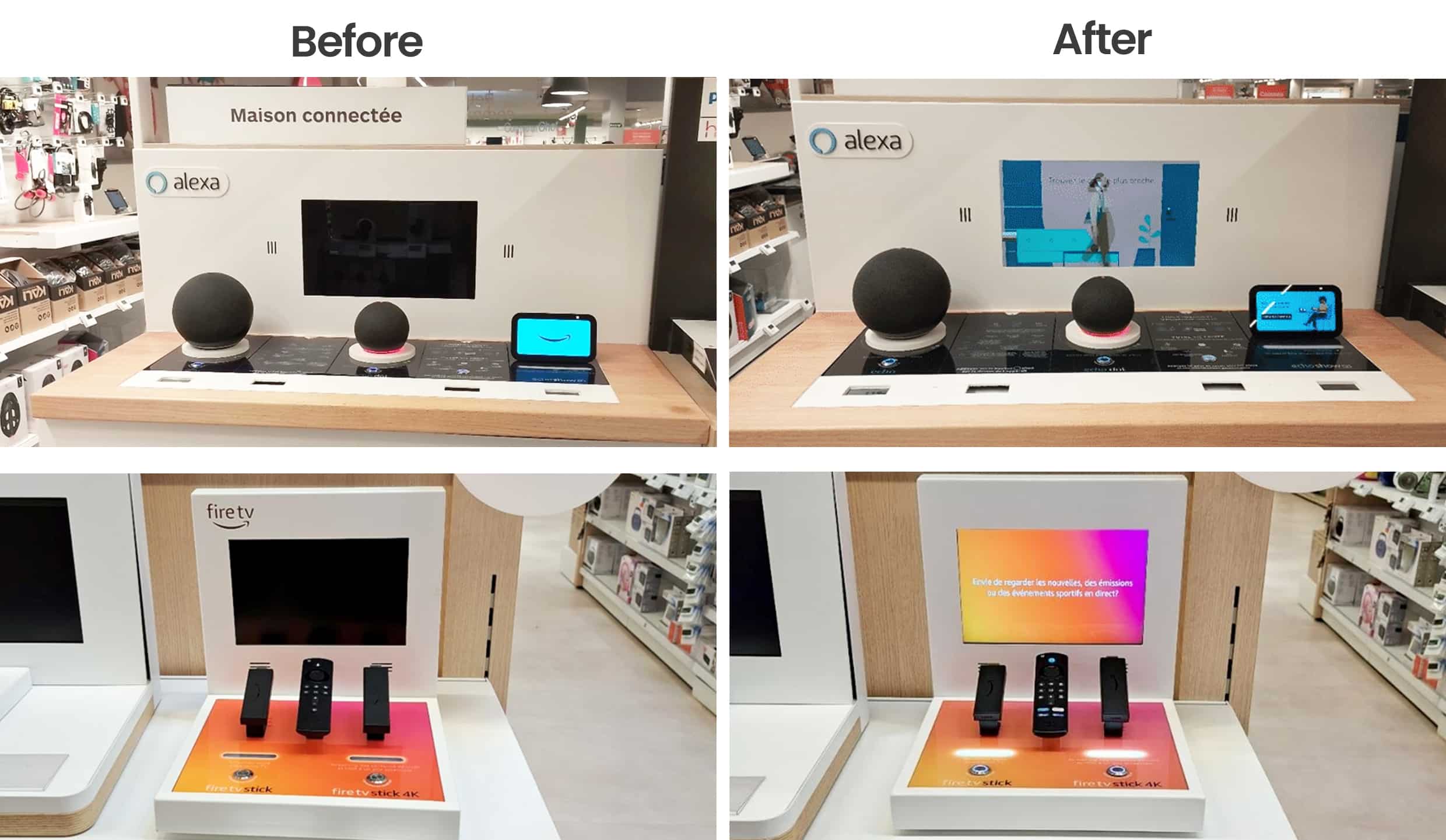
Both approaches have value, but the most effective strategy blends the two. Amazon worked with 100% Group to implement a proactive maintenance model supported by reactive services. Their goal was to improve the customer experience and reduce downtime across their retail estate, and they achieved this by combining scheduled maintenance tours with a dedicated helpdesk for fast ticket resolution. The result was measurable improvements to customer experience and stronger brand presence across locations.
Amazon saw measurable improvements in customer experience and operational efficiency after implementing a proactive maintenance strategy.
What fixes are typically needed to keep retail displays performing?
Retail display maintenance is an ongoing process. Displays are exposed to constant use, and over time, even the most robust fixtures need attention. Common issues include broken or stolen devices, damaged shelving or door units, and faulty cables or connectors. Interactive elements, such as screens or demo units, often require resets or repairs to stay functional.
These fixes are of a continuous cycle that keeps displays working as intended and aligned with brand standards. If left unresolved, even minor faults can disrupt the customer experience or compromise compliance. 100% Group supports retailers with both scheduled and on-demand maintenance, offering remote diagnostics and global field engineering to resolve issues quickly and consistently. Our teams work across markets to ensure displays remain operational, presentable and ready to support campaign activity.
On-site repairs and minor modifications reduce the need for full replacements, cutting down on resource consumption and environmental impact. Maintenance also ensures displays meet health, safety and brand standards, protecting customers, staff and reputation.
Tracking metrics such as resolution times and recurring issues allows retailers to refine their strategy. 100% Group’s platform provides full visibility into estate management, inventory and performance reporting.
What are the signs your retail display is costing you sales?
Displays don’t need to be broken to be ineffective. Often, the signs are subtle: worn surfaces, faded graphics, or branding that’s no longer relevant. These details shape how customers perceive your brand, and when they’re off, trust and engagement drop.
Technology failures are another common issue. If screens freeze, audio cuts out or interactive elements stop responding, the customer experience is interrupted. That moment of friction can be enough to lose a sale. Declining engagement or sales around a particular fixture is also a red flag. If the display hasn’t changed in months, or if it’s promoting an outdated offer, it’s unlikely to be doing its job.
The fix doesn’t always mean starting from scratch. Refreshing existing assets, replacing cables, updating messaging, repairing fixtures, is often more cost-effective and more sustainable. Retail display maintenance is about keeping your fixtures working, relevant and aligned with your brand. If they’re not, they’re costing you more than you think.
How does maintenance support sustainability, compliance and performance?
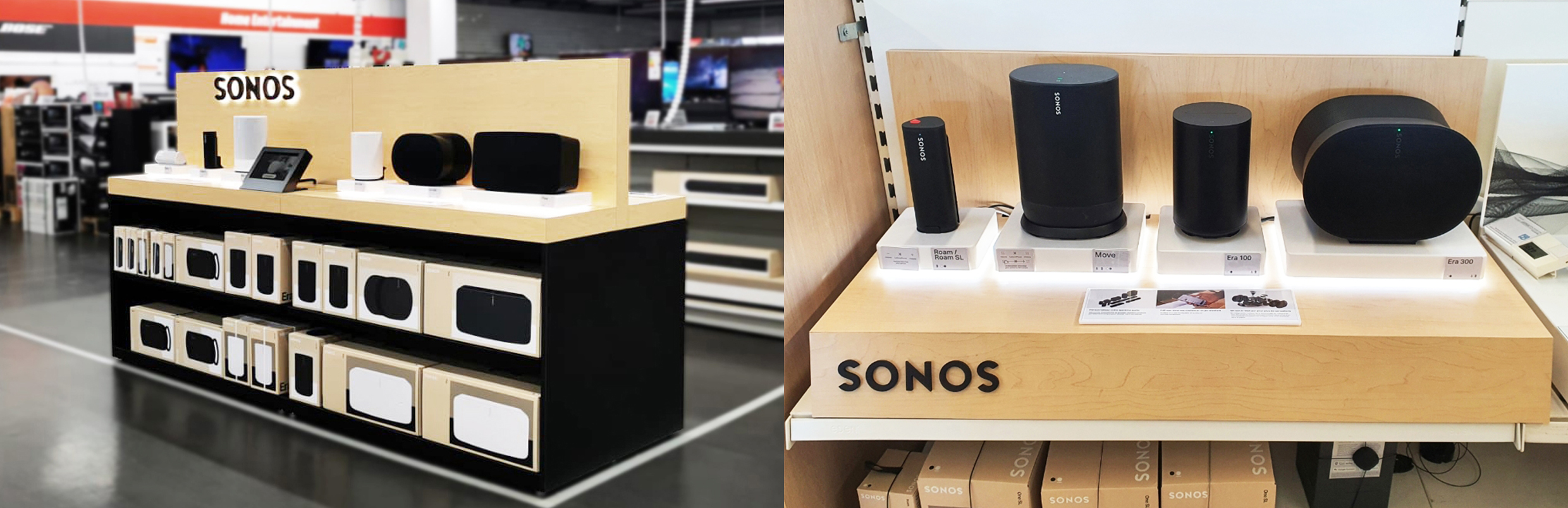
Regular retail display maintenance can extend the life of a fixture by up to two years, reducing waste and supporting circular economy principles. Working with 100% Group, audio equipment manufacturer Sonos diverted 73 tonnes of material from landfill by investing in display refreshes and responsible recycling as part of a wider retail revamp across EMEA.
On-site repairs and minor modifications reduce the need for full replacements, cutting down on resource consumption and environmental impact. Maintenance also ensures displays meet health, safety and brand standards, protecting customers, staff and reputation.
Tracking metrics such as resolution times and recurring issues allows retailers to refine their strategy. 100% Group’s platform provides full visibility into estate management, inventory and performance reporting.
Sonos reduced waste by diverting 73 tonnes from landfill through responsible recycling and display refreshes.
How 100% Group helps you maintain high-impact, compliant retail environments
100% Group offers proactive and reactive maintenance packages, global helpdesk support, remote diagnostics, scheduled and on-demand field engineering, and inventory management. These services help retailers maintain consistent, high-performing store environments across markets.
To see how our proactive and reactive services can support your next campaign, get in touch with our team here.